

10 reasons why hypnotherapy is not dangerous
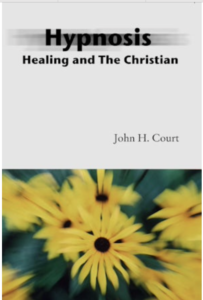
This is a short overview of the book “Hypnosis, Healing and the Christian” written by John Court. (full reference: Court, J. H. (2002). Hypnosis, healing and the Christian. Wipf and Stock Publishers.)
1. Hypnosis is One of Many Natural Altered States of Consciousness
Hypnosis is one among many naturally occurring altered states of consciousness (ASCs) that we experience daily, like focused concentration, daydreaming, meditation, and even prayer. Since Christians already accept these other states as legitimate, hypnosis should be viewed the same way.
2. You Remain Completely in Control – Your Free Will Is Never Surrendered
A persistent myth is that hypnosis involves losing control or falling into an involuntary sleep. In reality, hypnotized individuals remain conscious, focused, attentive, responsive, and capable of refusing suggestions that conflict with their values. They retain full ethical judgment and cannot be forced to do anything against their will—including immoral acts.
3. Thousands of Christians Are Already Finding Healing and Freedom Through Hypnotherapy
Christians can legitimately practice and receive clinical hypnosis without compromising their faith. Court demonstrates through numerous case studies that hypnotic techniques can be successfully integrated into Christian counseling and healing practices, with therapists explicitly incorporating Christian beliefs and spiritual principles into the therapeutic process.
4. Hypnosis Functions as a Communication Tool, Not a Mystical Force
Hypnosis isn’t about mysterious forces or occult powers. It’s fundamentally about effective human communication—helping someone envision possibilities, imagine healing, and access their own inner resources. Christians have always understood the power of words. “In the beginning was the Word,” John tells us. Jesus taught through stories. Preachers move hearts through language. Hypnotherapy simply refines this ancient art of communication to facilitate deeper healing. Modern understanding describes hypnosis as fundamentally about effective communication and interpersonal influence—similar to teaching, preaching, or counseling. There is nothing inherently occult about improved communication; the question is what values and beliefs are being communicated, not the method itself.
5. The Therapeutic Relationship is Built on Trust, Not Demonic Control
Yes, hypnosis requires trust. But isn’t trust the foundation of every healing and therapeutic relationship? Trust between doctor and patient, therapist and client? Trust between pastor and congregation. Trust between spouses. The trust required in hypnotherapy—what the Bible calls “knowing” in its deepest sense—isn’t a vulnerability to exploit. It’s a sacred space where genuine transformation becomes possible.
6. Biblical Objections to Hypnosis Are Based on Misinterpretations
The most popular Scriptural passage in the Bible often cited against hypnosis is Deuteronomy 18:10-11. Court carefully demonstrates that this passage does not refer to hypnosis. The Hebrew term in question relates to magic, sorcery, and occult binding practices—specifically the “casting of spells” and magical knots. The term is linked to idolatry and religious divination, not therapeutic practice. The same Hebrew word appears in Psalm 58:5 in reference to snake-charming as an occult practice, not hypnosis. In fact, Court consulted Dr. Fred Bush, Professor of Ancient Near Eastern Studies at Fuller Theological Seminary, to provide an expert opinion. Professor Bush concluded: “To use these passages as a reference to hypnosis is exegetically indefensible.”
7. Your Mind’s Ability to Receive Suggestion is Actually One of Your Greatest Natural and Spiritual Strengths
The heightened suggestibility in trance doesn’t mean gullibility or weakness of mind. Rather, it means the capacity to imagine and envision possibilities beyond present reality—which is actually a core Christian capability. Court notes this parallels the Christian life, where we “do not yet appear what we shall be like” but envision God’s promises.
8. Christians Receiving Hypnotherapy Show Spiritual Enrichment, Not Spiritual Damage
Empirically, Christians who receive clinical hypnosis from qualified practitioners report spiritual strengthening rather than spiritual harm. The evidence contradicts the claim that hypnosis invariably damages Christian faith. Court notes that even a single example of a Christian being helped and spiritually enriched dismisses the notion that hypnosis is intrinsically linked to evil.
9. Hypnosis Has Legitimate Medical and Therapeutic Applications
Hypnosis is successfully and officially used for pain management (including surgery and childbirth without anesthesia), dental work, smoking cessation, anxiety reduction, and trauma recovery – all without the side effects of medication. These documented healing benefits align with Christian values of promoting health and wholeness.
10. Rejecting Hypnosis Based on Its Misuse is Like Rejecting Prayer, Singing, or Other God-Given Gifts
John Court argues that condemning hypnosis because it appears in non-Christian religious contexts commits a logical error. By this reasoning, Christians should also avoid prayer, singing, and meditation because these appear in other religions. The issue isn’t the phenomenon itself but the spiritual context and intention. What matters is to whom we dedicate these practices and for what purpose we use them.
You can read my own encounter with hypnotherapy here.